


Fixed vs. Sliding Shower Screens: Which One Suits Your Bathroom Space Best?

When renovating a bathroom, one of the most crucial decisions—and one that impacts your daily routine the most—is choosing the shower screen. It is not just about preventing water from splashing out; the screen defines the room's aesthetics, visual openness, and, above all, its practicality.
If you are torn between a fixed shower screen (a single walk-in glass panel) or a sliding shower screen, this article breaks down the pros and cons of each option to help you choose the best fit for your layout.
Fixed Shower Screens: Minimalism, Openness, and Easy Cleaning

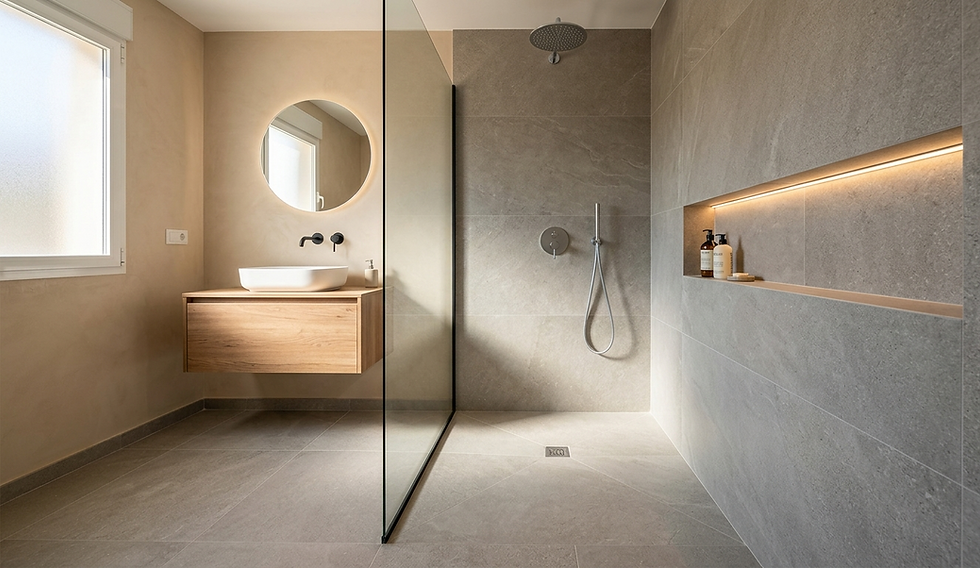
Fixed glass panels are the top favorite in modern bathroom renovations. They consist of a single sheet of tempered glass secured to the wall with a profile and, usually, a stabilizing bar. They leave an open space to walk in and out of the shower.
Pros:
Sensation of space: With minimal aluminum or PVC profiling, the bathroom looks much more seamless, bright, and spacious. It is the perfect trick for small bathrooms or guest toilets.
Low maintenance: They have no rollers, bottom seals, or hard-to-reach areas. When cleaning the glass, there are no awkward corners where limescale or moisture can accumulate.
Durability: Since there are no moving parts, wear and tear is virtually zero. You can forget about replacing broken rollers.
Cons:
Heat loss: Because it is an open design, water vapor escapes more easily, which can make the shower feel slightly cooler during winter.
Risk of splashing: If the fixed panel is less than 100 or 110 cm wide, water droplets are likely to splash outside, especially if you have high water pressure.
Sliding Shower Screens: Complete Enclosure and Maximum Practicality

Sliding shower screens are a classic choice that never fails. They operate using a system of fixed and moving glass panels that slide smoothly along upper and lower rollers.
Pros:
Total water tightness: They enclose the shower space completely. Water and heat stay inside, ensuring the bathroom floor outside remains completely dry.
Suitable for any space: They do not require any extra clearance space to open. They are ideal for compact showers enclosed between three walls as well as large front enclosures.
Cons:
More complex cleaning: Overlapping profiles, bottom tracks, and rollers tend to trap dirt and grime over time. (Tip: nowadays, many models feature quick-release rollers that make cleaning significantly easier).
Visual barrier: Having more metallic or PVC framing can visually "cut" the room, making an already narrow bathroom feel a bit smaller.
Which One to Choose Based on Your Bathroom Layout?
Choose a fixed panel if: You have a long shower tray (over 120 cm), prefer a sleek, avant-garde design, and want a bathroom that requires minimal effort to clean.
Choose a sliding screen if: Your shower tray is compact, your bathroom layout forces you to place the toilet or vanity right next to the shower, or you prioritize keeping the shower area warm and draft-free.
A Real Example from Our Local RenovationsIn recent months, we have seen a significant increase in walk-in fixed panel installations in properties across Huércal-Overa. Many homeowners are taking advantage of full renovations to replace old bathtubs with flush-to-floor resin shower trays, achieving much more modern and accessible bathrooms.On the other hand, for space-optimization projects and apartment refurbishments we have carried out in Albox, sliding screens with ultra-thin profiles remain the undisputed kings to ensure not a single drop escapes in busy, everyday family bathrooms.Are you planning to renovate your bathroom? Our company provides tailor-made bathroom renovations, taking care of every single detail—from plumbing and tiling to high-quality sanitaryware and shower screens. Contact us today and we will guide you through the process with a free, no-obligation quote.
Comments